
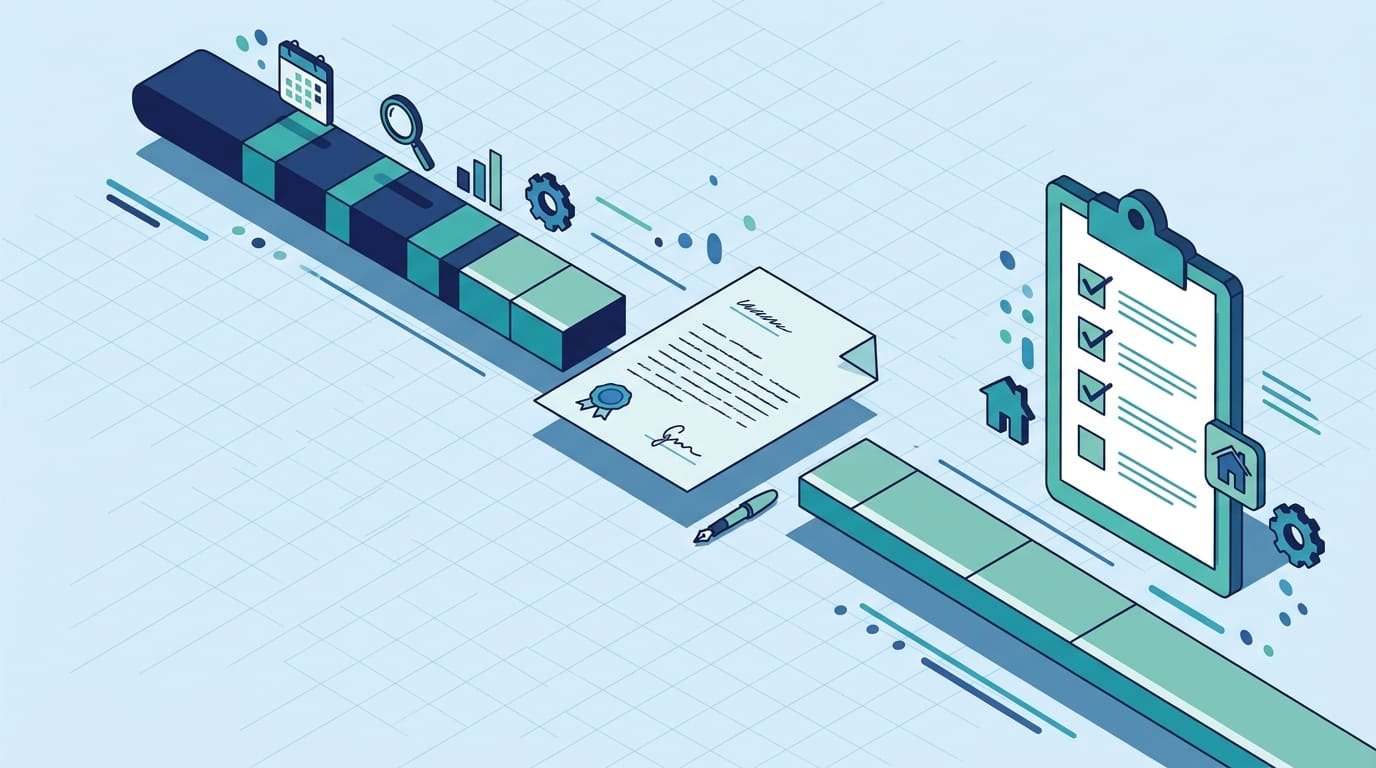
An AI Coding Assistant Policy is the document that decides whether AI-written code ships safely or ships blind.
Developers adopted the tools faster than teams wrote the rules. Stack Overflow’s 2025 Developer Survey found that 84% of developers use or plan to use AI tools, yet trust in the accuracy of their output fell to 29%. Sonar’s 2026 State of Code survey points the same way. It reports that 42% of committed code is now AI-generated or AI-assisted, while only 48% of developers always check it before committing.
This guide explains what an AI Coding Assistant Policy should cover and how to design review rules that scale. It also shows how customers and auditors ask about it, and how to roll it out in five steps. Treat it as a practical starting map for SaaS engineering and revenue leaders, not legal advice. Several statistics come from vendors that sell code-security products, so read them as directional.
Why an AI Coding Assistant Policy Became Urgent
Two forces made an AI Coding Assistant Policy urgent in 2026. Usage grew quickly, and the quality evidence stayed mixed. Customers, meanwhile, began asking questions that only a written policy can answer.
The Trust Gap in Numbers
The adoption data is clear. Between 84% and 90% of developers now use AI coding assistants. However, trust has not kept pace. In Stack Overflow’s 2025 survey, trust in AI accuracy fell from 40% to 29%, and about two thirds of developers said the output is “almost right, but not quite.”
Sonar’s survey of more than 1,100 developers adds a sharper point. Some 96% do not fully trust AI-generated code to be correct. Even so, only 48% always review it before committing. Sonar expects AI-assisted code to reach 65% of commits by 2027.
Security testing tells a similar story. Veracode’s 2026 GenAI Code Security Report tracked more than 100 models. It found an average security pass rate of 56%, barely changed from 55% a year earlier. In other words, about 44% of tasks introduced a vulnerability when the prompt gave no security instruction. The best model reached 68%. Pass rates also varied by language, at 63% for Python and 30% for Java.
One caveat matters here. Those tests used coding tasks without explicit security guidance, and the vendor sells security tooling. So the figures show a tendency, not a guarantee. Still, the direction is consistent across sources.
Why Speed Hides the Risk
AI code usually compiles and looks clean. That is the problem. Veracode found that generated code compiled almost every time, even as it failed security checks on a large share of tasks. A reviewer who skims clean-looking code can miss the flaw.
Volume makes it worse. AI raises the number of changes, but review capacity stays flat. As a result, the review step becomes the bottleneck, and teams quietly shorten it.
Dependencies add a second risk. A peer-reviewed USENIX Security study of package hallucinations tested 16 models across 576,000 code samples. It found that 19.7% of recommended packages did not exist. The rate was 5.2% for commercial models and 21.7% for open-source models. Moreover, 43% of the invented names reappeared on every one of ten repeated runs. An attacker can therefore predict a fake name and register it. This attack is often called slopsquatting. Our guide to AI agent supply chain security covers the wider dependency picture.
What the Research Does Not Show
The evidence has limits. No study cited here proves that a written policy reduces defects on its own. Likewise, most of the security figures come from controlled tasks, not from real production repositories. Vendor-sponsored surveys can also lean toward the problems their products solve. Even so, the pattern repeats across independent sources: usage is high, trust is low, and review is uneven. Therefore, a policy is a reasonable control, and you should measure whether it works in your own codebase.
What an AI Coding Assistant Policy Should Cover
A good AI Coding Assistant Policy is short and enforceable. Two pages usually beat twenty. It should answer five questions. Which tools are allowed? What data may go into them? Who reviews the output? What evidence exists? Who approves exceptions?
A clear scope keeps the AI Coding Assistant Policy from leaving gaps. For example, it should say whether it covers contractors, interns, and open-source contributions. In addition, it should apply wherever people write code, including local editors, browser chat, and command-line agents. Otherwise, the rules cover only the tools that are easiest to see.
Permitted Tools and Approved Use
Start with an approved list. Name the tools, the account type, and the configuration. For example, require company-managed accounts instead of personal ones. Require settings that keep your code out of vendor training where the tool offers that control.
Next, define what each tool may do. Autocomplete and chat are lower risk. Agent features that edit files, run commands, or open pull requests deserve explicit approval and tighter review.
Finally, expect people to use unapproved tools if the approved ones are weak. Detection helps. Our guide to shadow AI detection explains how to find unsanctioned tools without turning the policy into a hunt.
Data, Secrets, and Licensing Rules
Prompts are data transfers. Therefore, the policy should list what must never enter a prompt. Typical entries include credentials, API keys, customer data, regulated data, and unreleased security fixes.
Add secrets scanning to catch mistakes. Also decide who assesses each tool vendor. The vendor’s security reports, data retention terms, and sub-processors all belong in your vendor review.
Licensing needs a rule as well. Generated code can resemble licensed code. So run license scanning in the pipeline, and state who owns the decision when a scan flags something.
Review Rules Inside an AI Coding Assistant Policy
The central rule is simple. The person who submits the code owns it, whoever or whatever wrote it. Every other review rule follows from that.
Human Review Gates in an AI Coding Assistant Policy
Set review requirements by risk, not by who wrote the code. The table below is one way to tier them.
| Change type | Examples | Review requirement |
|---|---|---|
| Low risk | Documentation, tests, boilerplate | Standard review plus passing CI |
| Medium risk | Business logic, API changes | Standard review plus security scan and dependency check |
| High risk | Authentication, payments, cryptography, data access, infrastructure as code | Senior or security reviewer, plus a short threat check |
| Agent-authored | Any change opened by an AI agent | A named human owner, no self-merge, review at the tier of the change |
A few rules make these gates work. First, require disclosure. A tag or checkbox in the pull request template shows when AI helped, and it gives auditors a provenance trail. Second, require understanding. A reviewer should be able to explain what the code does, not just confirm that tests pass. Third, keep changes small, because long AI-generated diffs invite skimming.
Agent-authored changes deserve special care. For instance, an agent can open dozens of small pull requests in an hour. As a result, reviewers may approve them in bulk without real scrutiny. The AI Coding Assistant Policy should therefore limit how many agent-authored pull requests one reviewer handles each day. It should also require the human owner to explain every change in the description.
Reviewers also need a short checklist. It should cover whether each new dependency exists and is legitimate, whether input is validated, and whether authorization checks are present. It should also ask whether error handling is sound and whether logs avoid secrets. Finally, check that tests assert something meaningful, since generated tests can pass without proving much.
Automated Checks Before Merge
Manual review cannot absorb the extra volume alone. Automation has to carry part of the load. Veracode’s own recommendation points the same way. It suggests software composition analysis plus a package firewall.
A practical baseline includes:
- Static analysis on every pull request.
- Secrets scanning before merge.
- Dependency checks that confirm each new package exists, is expected, and is pinned.
- An allowlist or internal mirror for packages.
- License scanning.
- Tests with coverage thresholds for high-risk areas.
These checks turn the policy from a document into behavior. They also produce evidence automatically.
How Customers Ask About Your AI Coding Assistant Policy
Customers and auditors increasingly ask how you use AI in development. Compliance commentary reports questions such as these:
- Do you have a policy on employee use of generative AI tools?
- Are AI tool vendors part of your vendor risk program?
- How does AI-assisted code pass through change management?
- Does customer data or source code reach third-party models?
As of mid-2026, commentators note that the AICPA has not published an AI-specific module for SOC 2. Auditors therefore apply the existing criteria. Change management, access control, and vendor management all cover AI tools in practice. A clear AI Coding Assistant Policy lets you map those answers without improvising.
Strong answers are short and specific, and a well-documented AI Coding Assistant Policy makes them easy to give. For example: engineers use three approved tools on company accounts, every AI-assisted pull request is tagged, and high-risk changes need a second reviewer. In addition, attach the evidence. Vague answers, by contrast, trigger follow-up questions and slow the deal.
Keep the evidence together. A useful set includes the dated policy with a named owner, the approved tool list, the pull request template with its AI disclosure, and sample CI results. Add training acknowledgments and vendor assessments for each tool. When audit periods and reports age, the same discipline applies as for a SOC 2 bridge letter, which covers how to keep assurance current between reports.
Financial-sector customers add contract-level requests. Our guide to a DORA addendum for SaaS shows how those clauses reach software suppliers. Your AI Coding Assistant Policy then becomes part of the evidence behind your commitments.
AI coding assistant policy diagram showing generated code passing human review and automated checks before merge Diagram: an AI Coding Assistant Policy sends generated code through human review and automated checks before it merges.
How to Roll Out an AI Coding Assistant Policy in Five Steps
You can roll out a first version in a few weeks. Keep the scope tight, and pilot it with one or two teams first. Then improve it with use.
- Inventory real usage. Survey engineers and check editor extensions and repositories. You need to know what people actually use before you write rules.
- Set tiers and approve tools. Define the three risk tiers above, choose the approved tools, and decide which agent features need extra approval.
- Write the policy on one or two pages. Cover scope, permitted use, prohibited data, review rules, evidence, and the exception process. Plain language works better than legal language.
- Wire it into the pipeline. Add the pull request disclosure field, the automated checks, and the dependency controls. A rule that no tool enforces will drift.
- Train, measure, and review. Run a short training session and collect acknowledgments. Then track a few measures: the share of AI-assisted pull requests that are disclosed, review turnaround, and defects that escape to production. Our guide to AI agent productivity explains how to measure value without rewarding speed alone. Review the policy every quarter.
Who Should Own the Rules
An AI Coding Assistant Policy spans engineering, security, legal, and sales. It stalls when nobody owns it. Engineering leadership usually owns the rules and the pipeline. Security reviews the risk tiers and the checks. Legal covers licensing and vendor terms. Compliance keeps the evidence, and sales enablement shares it with customers.
Name one owner and one executive sponsor. Then set a quarterly review. Without that cadence, the policy ages quickly, because the tools change every few months.
Common Mistakes With an AI Coding Assistant Policy
Most failures come from rules that look good on paper and fail in daily work.
Rules That Fail in Practice
- Banning every tool. Bans often push usage out of sight, which removes your visibility.
- Writing vague guidance. “Use AI responsibly” cannot be audited or enforced.
- Skipping enforcement. An AI Coding Assistant Policy with no pipeline checks depends on goodwill.
- Using one tier for everything. Uniform rules either slow low-risk work or under-protect high-risk work.
- Ignoring agent features. Tools that act on their own need their own approval path.
Gaps in Evidence
- No disclosure in pull requests. Without it, nobody can show which changes involved AI.
- No approved tool list. Auditors and customers cannot tell what is in use.
- A stale document. An undated policy suggests nobody maintains it.
- Missing training records. Acknowledgments show that people received the rules.
- Measuring only speed. Output volume says little about quality or risk.
Strategic Outlook: An AI Coding Assistant Policy as a Sales Asset
From a growth standpoint, an AI Coding Assistant Policy shortens security reviews. Every enterprise deal that stalls on an AI questionnaire is a deal where a clear, current policy would have helped. In addition, a prepared answer signals engineering maturity, which matters to buyers comparing similar vendors. As a result, sales teams answer questionnaires faster and escalate less. Treat your AI Coding Assistant Policy as sales enablement as well as engineering hygiene.
The aim is safe use, not prohibition. The tools raise output, and most teams will keep using them. A good policy lets you capture that gain while keeping control of quality and risk.
It is worth staying grounded about limits. A policy does not make code safe. It creates the conditions for review, testing, and evidence. Some of the statistics cited here also come from vendor research, so validate them against your own defect and incident data. Finally, standards and audit expectations are still evolving, so review your approach with counsel and your auditor.
Next Steps for an AI Coding Assistant Policy
- Inventory the AI coding tools your engineers actually use today.
- Define three review tiers and name the approved tools in your AI Coding Assistant Policy.
- Add an AI disclosure field to your pull request template.
- Add dependency, secrets, and license checks to the pipeline.
- Name one owner and set a quarterly review date.
- Collect the policy, tool list, CI samples, and training records into one evidence folder.
Frequently Asked Questions
What is an AI Coding Assistant Policy? It is a short written policy that sets which AI coding tools engineers may use, what data they may share, how generated code is reviewed, and what evidence you keep. It also names who approves exceptions.
Should we ban AI coding tools? Usually not. Bans tend to push usage into unapproved tools. A better approach is to approve specific tools, set review tiers, and enforce checks in the pipeline.
Do we need to label AI-written code? Labeling is a useful control in an AI Coding Assistant Policy. A pull request tag or checkbox shows when AI helped, supports risk-based review, and gives auditors a provenance trail.
How do auditors treat AI-generated code under SOC 2? As of mid-2026, there is no AI-specific AICPA module, according to compliance commentary. Auditors apply existing criteria such as change management, access control, and vendor management to AI tools.
Is AI-generated code less secure than human code? Research suggests it can be. Veracode’s 2026 tests found that about 44% of tasks introduced a vulnerability when no security instruction was given. The practical answer is the same either way: review and test it at least as carefully as any other code.
Conclusion
An AI Coding Assistant Policy turns a fast, informal habit into a controlled process. Teams that approve tools, tier their reviews, automate checks, and keep evidence will answer customer and audit questions calmly. They will also keep the productivity gain that made the tools popular. Teams that rely on goodwill risk shipping flawed code and failing the first serious questionnaire.
None of this needs a large program to begin. Inventory the tools, define the review tiers, and add a disclosure field and a few automated checks. Then name an owner and set a review date. If you want a clear starting point, draft your first AI Coding Assistant Policy this month and build the evidence folder around it.
About the Author
Meet Waqas Raza — a B2B Digital Growth Specialist writing for Vitalora Life, with a background in Finance and 20 years scaling technical SaaS architectures. Waqas shares practical, data-backed frameworks on AI governance, SaaS growth, and turning AI investment into measurable outcomes.