
Enterprise Small Language Models are quietly becoming the default choice for the large majority of B2B SaaS workloads that once defaulted straight to a frontier LLM — and the economics behind that shift are no longer subtle.
Gartner predicts that by 2027, organizations will use small, task-specific AI models at least three times more often than general-purpose large language models, citing lower compute costs, faster responses, and higher domain accuracy as the primary drivers behind the shift. Separate industry analysis puts the gap even more starkly: for 80 to 90% of enterprise AI workloads, fine-tuned small models now match or beat larger models at a fraction of the cost. One real-world example makes the stakes concrete — a major telecom migrated its automated customer support to a fleet of fine-tuned small models in early 2026 and reported a 90% reduction in monthly inference costs alongside a 70% improvement in response speed.
This guide breaks down what Enterprise Small Language Models actually are, when they beat a general-purpose LLM for B2B SaaS use cases, and how to start routing workloads to them without a full architecture rebuild — and just as importantly, where a larger model still remains the right call.
Why Enterprise Small Language Models Matter for B2B SaaS in 2026
Three forces explain why Enterprise Small Language Models moved from a niche optimization to a mainstream architecture decision this year.
First, the cost curve has become impossible to ignore at scale. As frontier LLM capability keeps climbing, so does the price gap between running a general-purpose model for a narrow task and running a model actually sized for that task — and for high-volume B2B SaaS features like classification, routing, and structured extraction, that gap compounds fast across millions of calls per month.
Second, accuracy on narrow tasks often favors the smaller model, not the larger one. A fine-tuned small model built for a specific domain — contract review, support ticket triage, structured data extraction — regularly outperforms a general-purpose frontier model on that exact task, simply because it isn’t spending capacity on breadth it doesn’t need.
Third, the licensing and deployment landscape matured quickly in 2026. Major open-source small model families now ship under permissive commercial licenses with no royalty obligations, and can run on-premises or in a private cloud — which matters directly for AI agent data sovereignty requirements that many enterprise buyers already demand from their SaaS vendors. A vendor that can point to on-premises deployment as a genuine option, rather than a roadmap promise, clears a specific class of enterprise security objection that frontier-model-only architectures often can’t.
What Counts as a Small Language Model?
There’s no single universal cutoff, but Enterprise Small Language Models are generally understood as models under roughly 10 billion parameters — small enough to run efficiently on modest infrastructure, fine-tune quickly, and deploy close to where the data lives, as opposed to a frontier model with hundreds of billions of parameters designed for broad, general-purpose reasoning.
The practical distinction matters more than the parameter count itself. A small model fine-tuned on your support tickets, your contract templates, or your product catalog is optimizing for one job. A frontier LLM is optimizing for competence across an enormous range of jobs it was never specifically trained on for your use case — which is exactly why the smaller, narrower model often wins on the task that actually pays the bills. This isn’t a new idea in software generally; it mirrors the long-standing tradeoff between a general-purpose tool and a purpose-built one, just applied to model architecture instead of application design.
When Enterprise Small Language Models Make Sense — and When They Don’t
Not every workload belongs on a small model, and treating this as an all-or-nothing migration is one of the most common mistakes SaaS teams make. The decision usually comes down to task volume, task narrowness, and how much the accuracy ceiling of a general-purpose model actually matters for that specific job.
Good Fits for Enterprise Small Language Models
- High-volume, narrow tasks: classification, routing, structured extraction, and templated content generation, where the task shape barely varies call to call.
- Latency-sensitive features: real-time chat responses, live transcription, and in-product assistants where response speed directly affects user experience.
- Data-sensitive workloads: anything where keeping inference on-premises or in a private cloud is a compliance requirement rather than a preference, which connects directly to non-human identity and access controls many enterprise buyers now expect from AI-powered SaaS products.
Where a Larger LLM Still Wins
- Open-ended reasoning and novel problem-solving, where the task genuinely benefits from broad general knowledge rather than domain depth. Strategic planning assistants and open-ended research tools tend to fall here.
- Low-volume, high-complexity workflows, where the cost savings of a small model don’t offset the engineering effort of fine-tuning one. If a task runs a few hundred times a month rather than millions, the fine-tuning investment rarely pays for itself.
- Early-stage products still discovering their use case, where locking into a narrowly fine-tuned model too early can slow iteration. It’s often better to validate the task with a flexible frontier model first, then migrate once the task shape has stabilized.
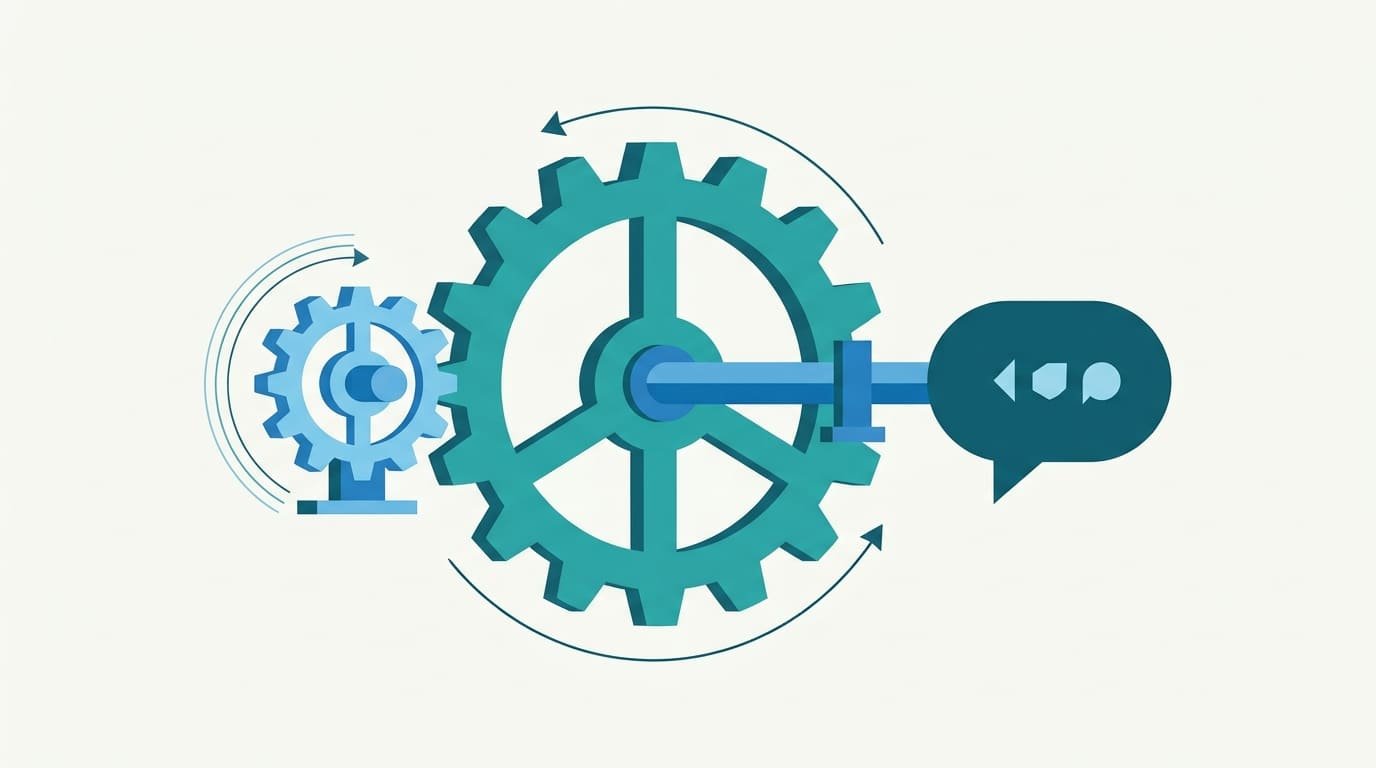
Show Image Diagram: a hybrid architecture routing high-volume, narrow tasks to Enterprise Small Language Models while reserving frontier LLMs for complex reasoning.
Setting a Benchmark: How Much Should You Expect to Save?
Without a benchmark, it’s hard to know whether a small-model pilot is actually working or just feels cheaper anecdotally. A few reference points help calibrate expectations for Enterprise Small Language Models specifically.
Real deployments have reported inference cost reductions in the range of 90% for high-volume, narrow tasks migrated from a frontier model to a fine-tuned small model, alongside meaningful improvements in response speed. On accuracy, task-specific small models have been shown to match or exceed larger general-purpose models on narrow benchmarks — for example, a small model fine-tuned specifically for contract review outperforming a much larger general-purpose model on that exact task, at a fraction of the inference cost.
A reasonable near-term target for most B2B SaaS teams piloting Enterprise Small Language Models is a 60-80% reduction in cost-per-call on migrated tasks, with accuracy holding flat or improving compared to the frontier-model baseline. If a pilot shows cost savings but a meaningful accuracy drop, that’s usually a signal the fine-tuning data needs more work, not that the small-model approach itself is wrong for that task. Running a short side-by-side comparison on a sample of real production calls, rather than trusting benchmark numbers alone, tends to surface this distinction faster than any published statistic can.
Who Should Own Small Language Model Adoption Inside a SaaS Team
This work tends to stall when it’s treated purely as an engineering cost-cutting exercise with no product or growth stakeholder involved. Engineering typically owns the fine-tuning pipeline and model routing infrastructure. Product usually owns identifying which features are good candidates based on volume and task narrowness. Finance or RevOps increasingly wants visibility into this work too, since AI inference cost is showing up as a real line item affecting gross margin at scale.
The pattern that works best in practice is a small, named group — usually an engineering lead paired with a product owner — running quarterly reviews of which AI features are strong candidates for migration, rather than a single one-time project. Treating this as a recurring architecture review, similar to how many teams already handle infrastructure cost optimization generally, tends to produce more sustained savings than a one-off migration sprint. Without a named owner, this work tends to happen once during a budget-pressure moment and then quietly stop, even as new AI features that could benefit keep shipping.
How to Start Adopting Enterprise Small Language Models Without a Full Rebuild
Most B2B SaaS teams don’t need to rip out their existing LLM integration to start benefiting from Enterprise Small Language Models. A staged approach works better in practice, and it also gives the team a chance to build confidence in the routing infrastructure before betting a major feature on it.
- Identify your highest-volume, narrowest tasks first. Classification, routing, and extraction calls are usually the easiest and highest-ROI candidates, since the task shape is consistent and the volume makes cost savings compound fast.
- Adopt a “master controller” pattern. Route routine, high-frequency calls to a small, fine-tuned model, while reserving expensive frontier-model calls for genuinely complex reasoning steps — the same architecture pattern behind several of the highest-profile enterprise cost-reduction case studies this year.
- Fine-tune on your own data, not generic benchmarks. A small model’s advantage comes almost entirely from being trained on your specific domain — your support transcripts, your product taxonomy, your contract language — not from the base model alone.
- Measure cost-per-call and accuracy separately, not just latency. Teams that only track speed miss the larger cost story, since the real win of Enterprise Small Language Models is usually the combination of lower per-call cost and equal or better task accuracy.
- Keep the frontier LLM in the loop as a fallback. A hybrid setup that escalates uncertain or out-of-distribution cases to a larger model catches the edge cases a narrowly fine-tuned small model will occasionally miss.
Teams already running structured retrieval pipelines can extend that same infrastructure rather than building new plumbing — our guide to RAG for enterprise covers architecture patterns that apply directly to a hybrid SLM/LLM setup.
Common Mistakes When Adopting Enterprise Small Language Models
- Treating it as an all-or-nothing migration. The strongest results come from hybrid architectures, not wholesale replacement of every LLM call with a small model.
- Skipping fine-tuning and expecting base-model performance to compete. An off-the-shelf small model without domain fine-tuning rarely matches a frontier LLM on complex tasks — the accuracy advantage comes from the fine-tuning step, not model size alone.
- Ignoring governance and evaluation just because the model is smaller. Enterprise Small Language Models still need the same evaluation rigor as any production AI system; smaller doesn’t mean lower-risk by default. Our guide on AI governance evaluation metrics applies just as directly here.
- Underestimating the ongoing maintenance of a fine-tuned model. Domain data drifts, and a small model fine-tuned once on last year’s support tickets can quietly degrade without a retraining cadence in place to catch it.
- Forgetting cost optimization applies at the routing layer too. Sending every call through the same decision logic without smart routing negates much of the savings; see our guide to AI agent cost optimization for the broader cost-management picture this fits into.
- Comparing pilot results against the wrong baseline. Measuring a fine-tuned small model against an under-optimized frontier-model prompt makes the small model look better than it is; a fair comparison uses the best realistic version of both approaches on the same evaluation set.
Strategic Outlook: Enterprise Small Language Models as a SaaS Margin Lever
From a growth and margin standpoint, Enterprise Small Language Models deserve a place on every SaaS product roadmap review this year, not just the engineering backlog. AI-feature inference cost is increasingly a line item that shows up directly in gross margin, and the SaaS companies treating model selection as a deliberate architecture decision — rather than defaulting to whichever frontier model API they integrated first — are the ones protecting margin as usage scales.
It’s worth staying grounded here too: this isn’t about chasing the cheapest possible model for every call. Over-optimizing a low-volume, high-stakes workflow onto an under-powered small model to save a marginal cost risks accuracy problems that cost far more in support tickets and churn than the inference savings are worth. The goal is matching model size to task requirements deliberately, not minimizing cost as an end in itself.
Practical next steps for SaaS product and growth teams:
- Audit your current AI feature set for the highest-volume, narrowest tasks first — that’s where Enterprise Small Language Models pay off fastest.
- Build the “master controller” routing pattern once, then extend it incrementally rather than treating each new feature as a fresh model-selection decision.
- Position lower AI infrastructure costs as a pricing and margin advantage where relevant, particularly for usage-based plans; see our guide to usage-based pricing for SaaS for how infrastructure cost feeds directly into pricing strategy.
- Revisit the SLM/LLM split quarterly as both frontier model prices and small-model capability continue to shift through 2026 and 2027.
For the underlying market forecast this guide draws on, see Gartner’s prediction on small, task-specific AI model adoption.
Frequently Asked Questions
What is a small language model? Generally, a model under roughly 10 billion parameters, small enough to fine-tune quickly and deploy efficiently on-premises or in a private cloud, optimized for a narrow set of tasks rather than broad general-purpose reasoning.
Do Enterprise Small Language Models replace large LLMs entirely? No, not entirely and not for every workload. The strongest results come from hybrid architectures that route high-volume, narrow tasks to small models while reserving frontier LLMs for complex, open-ended reasoning.
How much can switching to Enterprise Small Language Models actually save? Results vary by use case, but real deployments have reported inference cost reductions in the range of 90% for high-volume, narrow tasks, alongside faster response times.
Do we need our own data science team to fine-tune a small model? Not necessarily. Several open-source small model families now ship under permissive commercial licenses with mature, well-documented tooling, lowering the barrier for teams without a dedicated ML research function to get a first fine-tuned model into production.
What’s the biggest risk of adopting Enterprise Small Language Models too aggressively? Applying them to low-volume, high-complexity, or safety-critical workflows where the cost savings don’t offset a real accuracy or reasoning gap compared to a larger model.
How often should we revisit our SLM/LLM split once it’s set up? Quarterly is a reasonable cadence. Both frontier model pricing and small-model capability are moving quickly enough in 2026 that a split optimized six months ago may no longer be the right one.
Conclusion
Enterprise Small Language Models have moved from an edge-case optimization to a mainstream architecture decision, and the B2B SaaS companies that treat model selection deliberately — routing narrow, high-volume tasks to fine-tuned small models while reserving frontier LLMs for genuine complexity — are protecting margin that competitors defaulting to a single model choice are quietly giving away.
Starting with a hybrid “master controller” pattern on your highest-volume, narrowest tasks is achievable within a single quarter for most teams, without a full architecture rebuild. The pattern compounds too: once the routing infrastructure exists for one task, extending it to the next narrow, high-volume feature becomes a much smaller lift than the first migration was. If you’re ready to see where this applies in your own product, start by auditing your highest-volume AI calls this quarter and build your routing strategy around what that audit finds.
About the Author
Meet Waqas Raza — a B2B Digital Growth Specialist writing for Vitalora Life, with a background in Finance and 20 years scaling technical SaaS architectures. Waqas shares practical, data-backed frameworks on AI governance, SaaS growth, and turning AI investment into measurable outcomes.